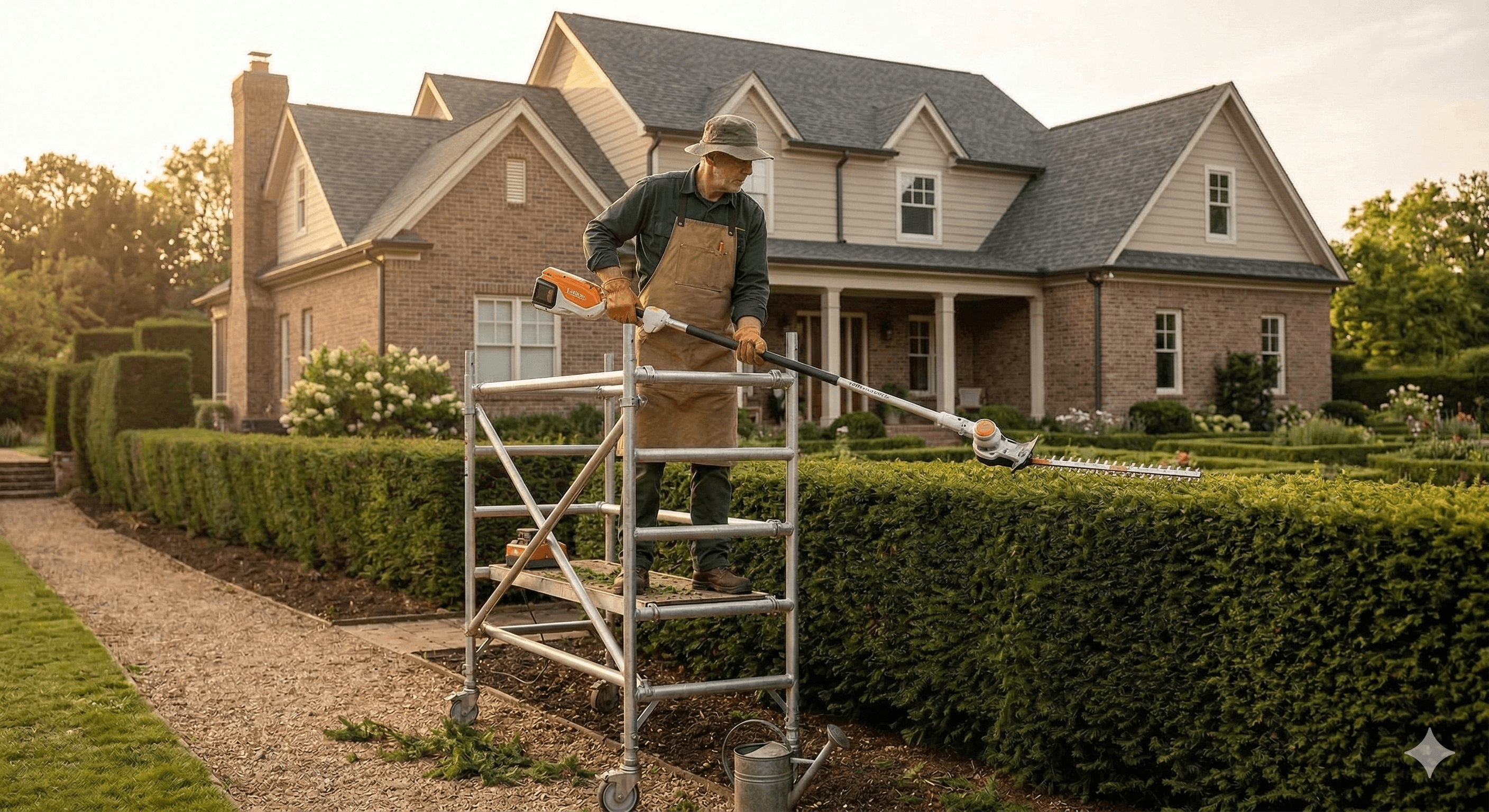
Early March feels like the moment to clean everything up—but here’s the twist: early March isn’t ideal for most Huntsville hedges. Shearing now robs spring bloomers of flowers and can push tender new evergreen growth that a late freeze may nip.
In North Alabama, timing matters more than technique. Our Zone 7b pattern—cool snaps through late March, fast‑warming late spring, then long, humid summers—means the wrong cut on the wrong week causes bud loss, frost damage, or midsummer stress. Clay soil adds another layer: roots stay cool and wet early, then bake and compact later.
Bottom line up front: skip March hedge shearing in Zone 7b; prune spring bloomers right after flowering, and shape evergreen hedges after the first flush hardens in late May. If you’ve wondered when to trim hedges in Huntsville, use the month‑by‑month map below and match it to your shrub species.
What month should I trim hedges in Huntsville? Your month‑by‑month map for when to trim hedges in Huntsville
Zone 7b context for Huntsville: the average last frost lands around March 31. Plan spring‑flowering shrubs after their March–April bloom, and wait to shape evergreen hedges until the late‑May flush has hardened.
-
January–February
- What to do: Only corrective pruning on broken, crossing, or diseased wood. Avoid shearing.
- Why: Cuts now can trigger early growth during a warm spell that’s vulnerable to a late freeze.
- Species notes: Camellia japonica finishes winter bloom; delay shaping until it’s done.
-
March
- What to do: Resist the itch to shear. Remove storm damage or a few wayward shoots only.
- Why: Most spring bloomers (azalea, loropetalum, forsythia, many viburnums) are setting up for bloom; evergreens will push soft growth that a late cold snap can burn.
-
April
- What to do: As spring bloomers finish, prune within 2–4 weeks. Focus on thinning and light shaping.
- Why: Next year’s flower buds begin forming in early summer; you want cuts done first.
-
Late May–June
- What to do: Primary shaping window for boxwood and holly hedges—after the first flush of growth has fully hardened.
- Why: Hardened growth responds cleanly to shearing or selective cuts and is less prone to scorch.
-
July
- What to do: Light touch‑ups only. Hydrate deeply the day before and prune early in the morning.
- Why: Heat and clay soils increase stress; keep foliage coverage for shade on roots.
-
August
- What to do: Avoid heavy pruning. A small tidy if absolutely needed.
- Why: Strong regrowth now may not harden before fall, inviting winter injury.
-
September–October
- What to do: Minimal shaping on evergreens; deadwood removal on all.
- Why: Encourage slow, sturdy hardening into winter rather than a flush of late soft growth.
-
November–December
- What to do: Clean‑up and corrective cuts only.
- Why: Save structural work for the right windows above so you don’t trigger off‑season growth.
If this sounds like a lot to track, Turf Titans plans and performs species‑correct hedge pruning for homeowners across Huntsville and Madison. See our seasonal hedge trimming approach → Same‑day response. No contracts.
Can I trim azaleas in March in North Alabama?
Hold the shears. Most azaleas around Huntsville bloom late March through April. If you shape them in early March, you’re cutting off the very flower buds you’ve been waiting on. Instead, let the show happen, then prune promptly—ideally within 2–4 weeks after the last flowers drop.
Local rule of thumb: spring‑flowering shrubs should be pruned immediately after bloom and finished before midsummer because they set next year’s flower buds in early summer. For azaleas, that means wrap up structural edits by early June.
How to prune azaleas well:
- Prioritize hand‑pruning. Reach inside, remove one third of the oldest stems at the base, and shorten lanky shoots back to side branches.
- Avoid shearing the surface like a hedge; it creates a thin shell of leaves and woody, bloom‑poor interiors.
- Refresh mulch 2–3 inches deep after pruning to buffer Huntsville’s clay soil swings.
When should I prune boxwood and holly hedges in Zone 7b?
Wait for late May into June—after the first flush has hardened—then shape. In Zone 7b, that’s the sweet spot where new growth is firm enough for clean cuts and temperatures haven’t reached peak summer stress.
Guidelines for a crisp, healthy look:
- Primary shaping: Late May–June. Shear for formal lines or hand‑clip for a softer face.
- Midseason tidy: One light touch‑up in mid‑July if needed. Keep the base slightly wider than the top so lower leaves get light.
- What to avoid: Big cuts in March (frost risk) and heavy shearing after early August (late, tender regrowth).
Boxwood specifics: Many cultivars tolerate a 20–30% size reduction in the late‑May window, but avoid cutting back to leafless, ancient wood. Holly specifics: American and Japanese hollies accept stronger reductions than boxwood; still, stage major size changes over two seasons.
How soon after flowering should I cut back azaleas and loropetalum?
Fast. For both azaleas and loropetalum, the ideal window is within 2–4 weeks after flowering ends. Around Huntsville, loropetalum often blooms March–April with occasional light summer flushes. Do any structural reshaping right after spring bloom, then keep summer work minimal—just a quick snip for strays.
Why the rush? Next year’s buds start forming by early summer, so delays cost you blooms. Aim to finish significant cuts by early June for reliable color next spring.
Pro tips:
- Make thinning cuts to interior branches to keep light and air moving.
- If a plant is wildly overgrown, do a staged renewal over 2–3 years rather than a hard one‑time chop.
Is it bad to trim hedges before Huntsville’s last frost? Read this before deciding when to trim hedges in Huntsville
It can be. Shearing or heavy cutting in early March often pushes a soft flush that a late freeze can burn. Huntsville’s last frost averages around March 31, and cold pockets or open exposures can run a bit later. Damage shows up as browned tips or dieback that you’ll have to cut again—doubling the stress.
What’s safe before last frost:
- Remove winter‑damaged or rubbing branches.
- Clip a few outliers that snag the walkway.
- Hold off on shaping until after azaleas/loropetalum bloom and, for evergreens, until late May when growth is hardened.
Microclimate check: Low spots, north‑facing walls, and open windy sites are more frost‑prone. If you’re in one of these, be extra conservative with March pruning.
How does clay soil and summer heat affect hedge pruning?
Huntsville’s clay is a blessing and a headache. It holds water well in spring but compacts easily and warms slowly, so roots stay cool even as tops start growing. By June, the same soil can bake and shed water. That swing changes how—and when—you prune.
- Spring timing: Because clay delays root warming, new shoots can be slower to harden. That’s why the late‑May window is reliable for evergreen hedges; you get firmer tissue that heals faster.
- Summer strategy: In July–August heat, limit pruning to light touch‑ups. Keep more foliage than you think—leaves shade roots and reduce water loss.
- Aftercare that matters: Water deeply the day before summer pruning, and mulch 2–3 inches to buffer moisture. Avoid fertilizing right after a big cut in heat; you’ll push soft, scorch‑prone growth.
For slopes and new plantings in clay, consider aeration with a soil probe around the dripline after pruning to relieve compaction and help water penetrate.
How much can I safely cut off an overgrown hedge at once?
Use the 20–30% rule for most evergreen hedges. Removing up to one‑third of total height/width in late May–June is usually safe for boxwood and hollies in Zone 7b. If the hedge needs more than that, stage it across two seasons.
Species realities:
- Boxwood: Best reduced in steps; avoid cutting back into bare, old wood expecting fast refoliation.
- Hollies (Ilex crenata, I. glabra, I. opaca): Tolerate stronger reductions; still, leave leafy growth on every branch.
- Azalea and loropetalum: No shearing into nubs. Do renewal by taking a few oldest canes to the base right after bloom, then shorten select leaders.
- Privet (if present): Handles heavier cuts and can be reset more aggressively, but monitor for rapid regrowth.
When a hedge is truly out of scale with the site, consider a rejuvenation plan over 2–3 years: reduce by 25–30% the first year, shape and thin the second, fine‑tune the third.
Should I hand‑prune or shear different shrubs for healthier growth?
Match the method to the plant and the look you want.
Hand‑prune (natural form, bigger blooms, healthier interiors):
- Azalea, camellia, gardenia, abelia, viburnum, spirea, sweetspire.
- Technique: Thin first—remove a few oldest stems at the base—then shorten long shoots to a side branch. This preserves flower set and lets light into the plant.
Shear (formal edges and tight geometry):
- Boxwood, Japanese holly, some privets.
- Technique: Wait until the late‑May flush hardens, then shear with the top slightly narrower than the base to keep lower foliage from thinning. Follow with a few selective hand snips to open “windows” for light.
Tool hygiene:
- Sharp, clean blades make smaller wounds that seal faster in our humid summers. Disinfect when moving between plants to avoid spreading disease.
If you prefer a professional cadence that tracks species, growth stages, and weather, our team can handle the plan and the pruning. Review what’s included on our service page: Hedge trimming in Huntsville →
Local takeaway and next steps
In Huntsville’s Zone 7b, timing is everything: skip March hedge shearing. Let spring bloomers flower, then prune within 2–4 weeks. Save the big shape‑up for evergreen hedges until the first flush hardens in late May. Work lightly during summer heat, and lean on mulch and deep watering in our clay soils to help plants recover quickly.
That one stance—no March shearing, bloomers after bloom, evergreens after hardening—protects flowers, avoids frost burn, and reduces summer stress. If you want a locally tuned schedule without the guesswork, explore our hedge trimming service and book a visit.
Ready to dial in the right window for your neighborhood? Get a free quote for hedge pruning in Huntsville → /locations/huntsville-al