Scalping too early can actually slow Bermuda’s green‑up. In Huntsville, waiting until after our average last frost often greens the lawn faster than an early‑March cut. If you’ve wondered when to scalp Bermuda in Huntsville or how Zoysia and Tall Fescue fit into the spring plan, this guide is for you.
Why this matters here: North Alabama’s clay soils hold moisture and warm slowly, and Zone 7b temperatures can swing well into late March. That combination rewards patience and punishes the early buzz‑cut.
Bottom line up front: Only scalp Bermuda in Huntsville—and time it for late March to early April after hard freezes pass. Do not scalp Tall Fescue. Ease Zoysia down gradually rather than taking it to the dirt.
What is lawn scalping and does it help Bermuda in North Alabama—and when to scalp Bermuda in Huntsville?
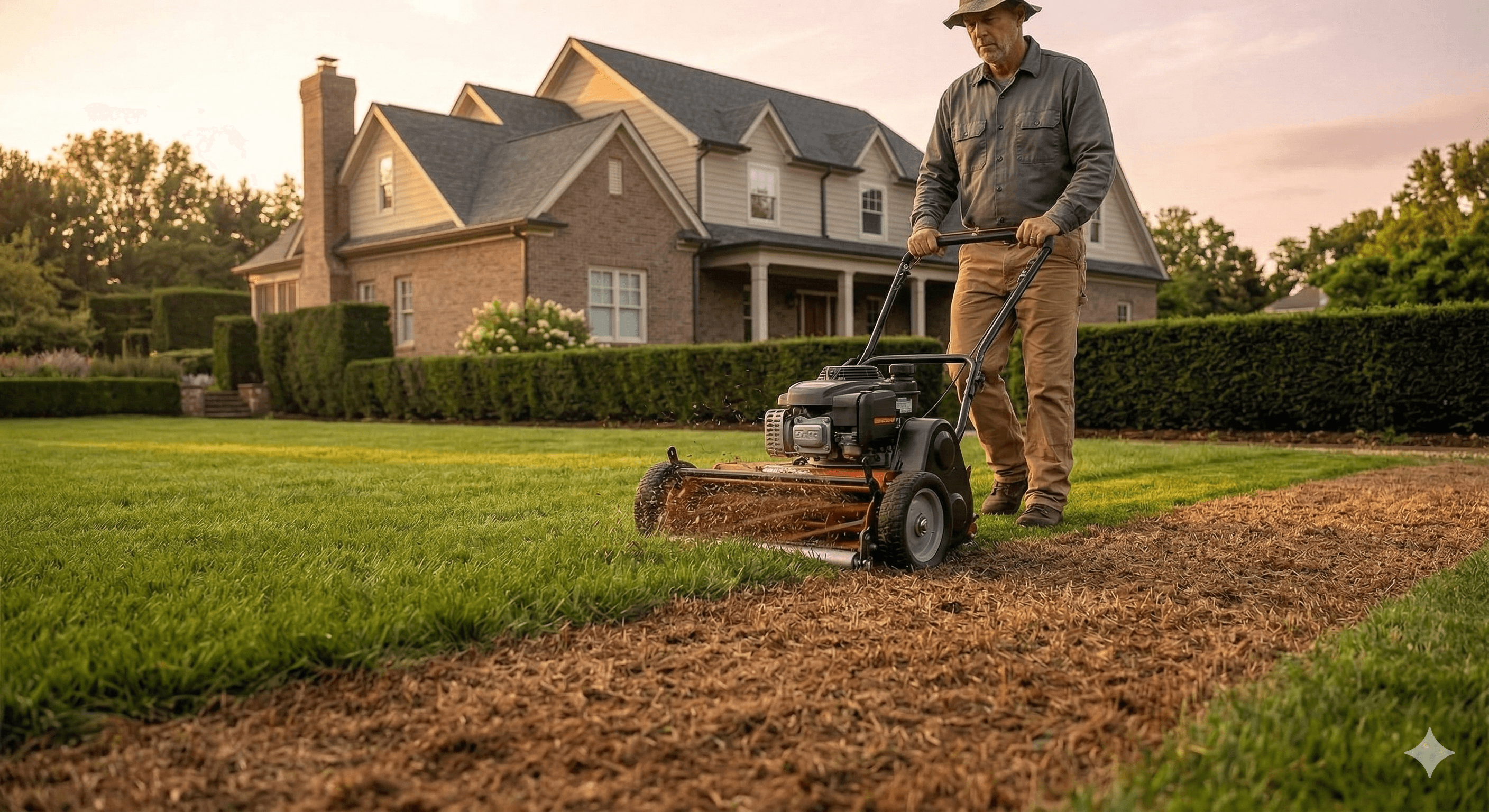
Scalping is a one‑time, very low cut at the start of spring to remove dormant leaf material and expose the soil to sunlight. On Bermuda, it jump‑starts warming, reduces leftover thatch, and lets fresh shoots push through evenly.
In North Alabama, scalping helps Bermuda most when it’s timed to the end of frost season. Our clay soils hold winter chill and moisture; cut too early and you expose crowns to cold nights while the soil still lags behind. The result can be slower green‑up and patchy recovery instead of the uniform “pop” you wanted.
The counterintuitive move is to wait. Once nights are consistently milder and the 10‑day forecast stops flirting with hard frost, that one low pass pays off.
When to scalp Bermuda in Huntsville (the safe window)
Huntsville sits in Zone 7b, with an average last frost around March 31. Plan your Bermuda scalp for late March to early April, targeting a week when:
- Overnight lows mostly hold at or above the low 40s
- No hard freeze is in the 7–10‑day outlook
- Soil temps are trending up and the turf shows a hint of green at the nodes
That timing beats the “first warm weekend in March” itch. Remember, a premature scalp on clay soil removes insulation just when crowns still need it. Waiting a couple of weeks often leads to a quicker, more even green‑up than the early‑bird approach.
Should Zoysia be scalped or just mowed low in spring?
Zoysia is a different animal. It wakes more slowly than Bermuda and is less forgiving of aggressive cuts on compacted, moisture‑holding clay. Skip the full scalp and reduce the height gradually over 2–3 mows as temperatures stabilize.
Aim to lower Zoysia toward its seasonal maintenance height (often 1.5–2 inches for many home lawns) without shaving the crowns. The goal is a tidy reset, not a buzz cut. On bumpy yards, a cautious step‑down approach prevents gouging high spots and exposing soil that will crust on clay.
Why you should never scalp Tall Fescue in Huntsville
Tall Fescue is a cool‑season grass. It doesn’t go truly dormant like Bermuda or Zoysia and relies on spring leaf area to photosynthesize before summer heat arrives. Scalping Fescue in Huntsville strips that energy reserve, thins the stand, invites weeds, and increases summer stress.
Keep Tall Fescue around 3.0–3.5 inches in spring (and closer to 4 inches in summer). If it looks shaggy after winter, a single tidy cut—never a scalp—is the right move.
How low should I set my mower for Bermuda on clay soil?
Think “reset,” not “bare soil.” On a typical Huntsville Bermuda lawn:
- Scalp target: about 0.5–0.75 inches on smoother, level areas with a reel mower; 0.75–1.0 inches with a rotary mower and uneven clay soils.
- Summer maintenance: often 1.0–1.5 inches for common residential Bermuda (adjust for your variety, equipment, and yard smoothness).
Tips for a clean reset on clay:
- Drop in stages: If you finished last season at 1.5–2 inches, take one pass at roughly 1 inch, bag, then a second pass lower only where crowns aren’t being shaved.
- Use sharp blades and bag or vacuum: Heavy brown leaf litter can mat down on clay and smother new shoots if left in place.
- Don’t chase perfection on the first pass: Uneven clay lawns have highs and lows; accept a slightly higher scalp where the mower would gouge.
What if a late frost hits after scalping Bermuda in Huntsville?
It happens. A light frost may bronze the leaves, but established Bermuda crowns usually bounce back. Here’s how to protect recovery:
- Pause nitrogen: Hold fertilizer until the lawn is back to actively growing and at least 50% green.
- Go easy on water: Don’t flood the lawn before a freeze; saturated clay plus cold is a poor combo. Afterward, water normally only if the top inch dries out.
- Minimize traffic: Avoid walking or mowing when leaves are frosted or soil is spongy; footprints can crush tender shoots.
- Let it warm: Give it a few sunny days before making another height adjustment.
If your forecast shows a clear hard freeze is coming and you haven’t scalped yet, wait. The few days you “lose” you’ll quickly gain back with a healthier, more uniform green‑up.
What to do after scalping in Zone 7b: watering and fertilizer timing
Your post‑scalp checklist in Huntsville:
- Watering: Only as needed. Our clay holds moisture, so skip daily sprinkles. Aim for a deep soak when the top inch dries, then let it drain. Early spring often needs little to none beyond rainfall.
- Fertilizer: Delay nitrogen until Bermuda is roughly 50% green, then start with a light, slow‑release feeding (about 0.5 lb N per 1,000 sq ft). Feeding too soon risks cold injury and wastes product that the grass can’t yet use.
- Pre‑emergent: If you apply pre‑emergent in late February to early March, a late‑March scalp is fine. Set the deck high enough at first to avoid scraping the soil surface, then lower one notch if needed; you’re removing leaf litter, not disturbing the soil layer where the barrier sits.
- Topdressing and leveling: After the reset, a very light sand topdress can help smooth minor bumps. Keep it thin—on clay, thick layers can seal the surface. Water it in gently and avoid walking on soft areas.
Pro move: Keep your mower slightly higher on shaded or thin zones and match irrigation to sun and slope. North‑facing, clay‑heavy pockets warm and dry slower—treat them as their own micro‑lawns.
If you want a clean, even reset without the mess, consider a one‑time spring mow and bag service. It’s the simplest way to start the season right without spending your Saturday hauling clippings. See our mowing options here: Lawn Mowing Service
Same-day response · No contracts · Locally owned
How to clean up and handle the heavy clippings after a scalp
Bermuda scalps produce a surprising amount of debris. On clay, thatch and leaf mulch tend to cake—don’t leave it.
- Bag as you mow: Use a mower bag or a lawn vacuum. Make an extra cleanup pass perpendicular to the first cut.
- Rake the trouble spots: Low pockets on clay collect piles; a quick rake prevents smothering.
- Don’t clog drains: Keep piles off curbs and inlets; wet clay plus clippings can block flow.
- Compost or curbside: Brown Bermuda clippings compost well when mixed with green material. If you use curbside pickup, place them in approved lawn bags and avoid overloading—wet clippings are heavy.
A clean surface lets sunlight reach the soil, warms clay faster, and speeds green‑up.
Local takeaway
In Huntsville’s Zone 7b climate, patience is power. Only scalp Bermuda—and do it in the late‑March to early‑April window after the threat of hard freezes fades. Keep Zoysia on a gradual step‑down, not a full scalp. Never scalp Tall Fescue. Use modest heights for the reset on clay soil, remove the debris, and wait to fertilize until the lawn is truly waking up.
If you’d like a local crew to handle the first low cut, cleanup, and spring setup, you can book a visit on our Lawn Mowing Service page. For neighborhood‑specific scheduling and availability, start here: Huntsville, AL
Get a free quote for spring lawn mowing in Huntsville →