Homeowners in Huntsville often rush to lay sod with the first warm weekend in March—then wonder why seams gap, edges crisp, and green turns patchy. The counterintuitive truth: waiting until mid–late April, after 4‑inch soils reach roughly 65°F, consistently beats early-spring installs in our clay. If you’ve been searching for when to lay sod in Huntsville, the calendar alone won’t save you—soil temperature and frost history will.
Why it matters locally: North Alabama’s clay holds winter cold and spring moisture longer than the air says it should. Put sod on cold, tight clay, and roots hesitate; put it down when soils warm and loosen, and Bermuda or Zoysia anchors quickly and shrugs off early heat.
Bottom line up front: In Huntsville’s Zone 7b, the safest, most reliable window to install Bermuda and Zoysia sod is late April through May; avoid fall installs entirely. If you’re planting later into summer, plan on 2–3 weeks of daily irrigation for strong root-in.
What month is best to lay sod in Huntsville?
For Bermuda and Zoysia, late April through May is the sweet spot. In most years, 4-inch soil temperatures in Huntsville cross and hold near 65°F sometime after April 10, which wakes up warm-season roots and shortens the vulnerable phase when seams can dry out. Waiting those extra couple of weeks after the last frost risk typically pays off with quicker establishment and fewer callbacks.
Think in terms of soil, not just the calendar. Huntsville’s average last frost hovers in early April, but clay soils lag behind the air. When the top 4 inches of soil sit at 65–70°F for several days, that’s your green light. Installs from about April 20 through May 31 usually deliver the fastest rooting with the least water stress.
If you’re planning a turnkey project and want a step-by-step of how we stage, grade, and roll, see our approach to sod installation.
What soil temperature tells you when to lay sod in Huntsville?
Aim for 65–70°F at a 4-inch depth. That’s the threshold where Bermuda and Zoysia shift from “survive” to “thrive,” pushing new white roots that knit sod to subsoil. Below the mid-60s, new sod tends to sit and sulk, especially on dense clay that’s still shedding winter chill.
How to check: use a simple soil thermometer or a probe with a digital readout, test in the morning at 4 inches deep, and repeat for several days. North-facing slopes and shaded beds run cooler and may need another week. Once temps hold in the mid-60s, install promptly, water to settle seams, and let warmth do the heavy lifting.
Local rule of thumb: In Zone 7b around Huntsville, begin warm-season sodding after April 10 when 4-inch soils reach ~65°F. If you’re installing into June or July, expect 2–3 weeks of daily irrigation to keep the top 4–6 inches consistently moist while roots colonize.
Can you lay sod before the last frost in Zone 7b?
You can, but you shouldn’t. Pre-frost installs on cold clay invite problems: edges desiccate between watering cycles, seams don’t knit, and a late cold snap can bruise or stall tender tissue right as it tries to root. Early-March air can flirt with 70°F, yet the soil at 4 inches can still be in the 50s—too chilly for warm-season rooting momentum.
Waiting until after the last frost—and after soils hit the mid-60s—means your new Bermuda or Zoysia wakes up fast, takes water efficiently, and resists early heat with a solid root system. That patience can shave weeks off establishment compared to sod laid into cold, compacted ground.
Is May or June too late to install sod in North Alabama?
May is ideal. Days are long, soils are warm, and roots explode. June can still be excellent if you’re ready to water with discipline. The tradeoff: heat speeds top growth but demands consistent moisture. On Huntsville clay, that means daily irrigation the first 2–3 weeks, sometimes split into two shorter cycles to reduce runoff and get water into the root zone.
By July, you can still succeed, but the margin narrows. Factor in heat waves, afternoon thunderstorms, and any local watering limits. If you choose a mid-summer install, stage everything—graded base, amendments incorporated, irrigation audited—so the sod is down and drinking within hours of delivery. That tight choreography matters more on clay, which can shed water from the surface yet hold it stubbornly below if the profile isn’t opened up.
How do you prepare clay soil in Huntsville for new sod?
Great sod on poor prep equals mediocre lawns. In North Alabama’s clay, preparation is half the job—and the half you feel for years. Here’s a proven sequence we use in Huntsville:
- Kill and clear: Eliminate existing weeds and grass, remove debris, and rough-grade to direct water away from the house and off low spots.
- Open the profile: Till or fracture the top 4–6 inches so roots have pathways. On heavy clay, a second pass at a crisscross angle helps.
- Amend smartly: Blend 1–2 inches of mature compost into that top layer. You can also incorporate a modest amount of expanded shale or calcined clay to create durable pore space. Avoid dumping in pure sand; mixed indiscriminately with clay, sand can make a brick.
- Set grade: Fine-grade to a smooth, even surface with a gentle fall from the foundation. A light rolling pass firms the surface to “footprint depth”—you should leave a shallow print, not a crater.
- Check chemistry: Target a pH near 6.0–6.5 for Bermuda and Zoysia. If a soil test calls for lime or minor nutrients, incorporate them now. Use a low-n starter (about 0.5 lb N/1,000 sq ft) to feed roots, not top growth.
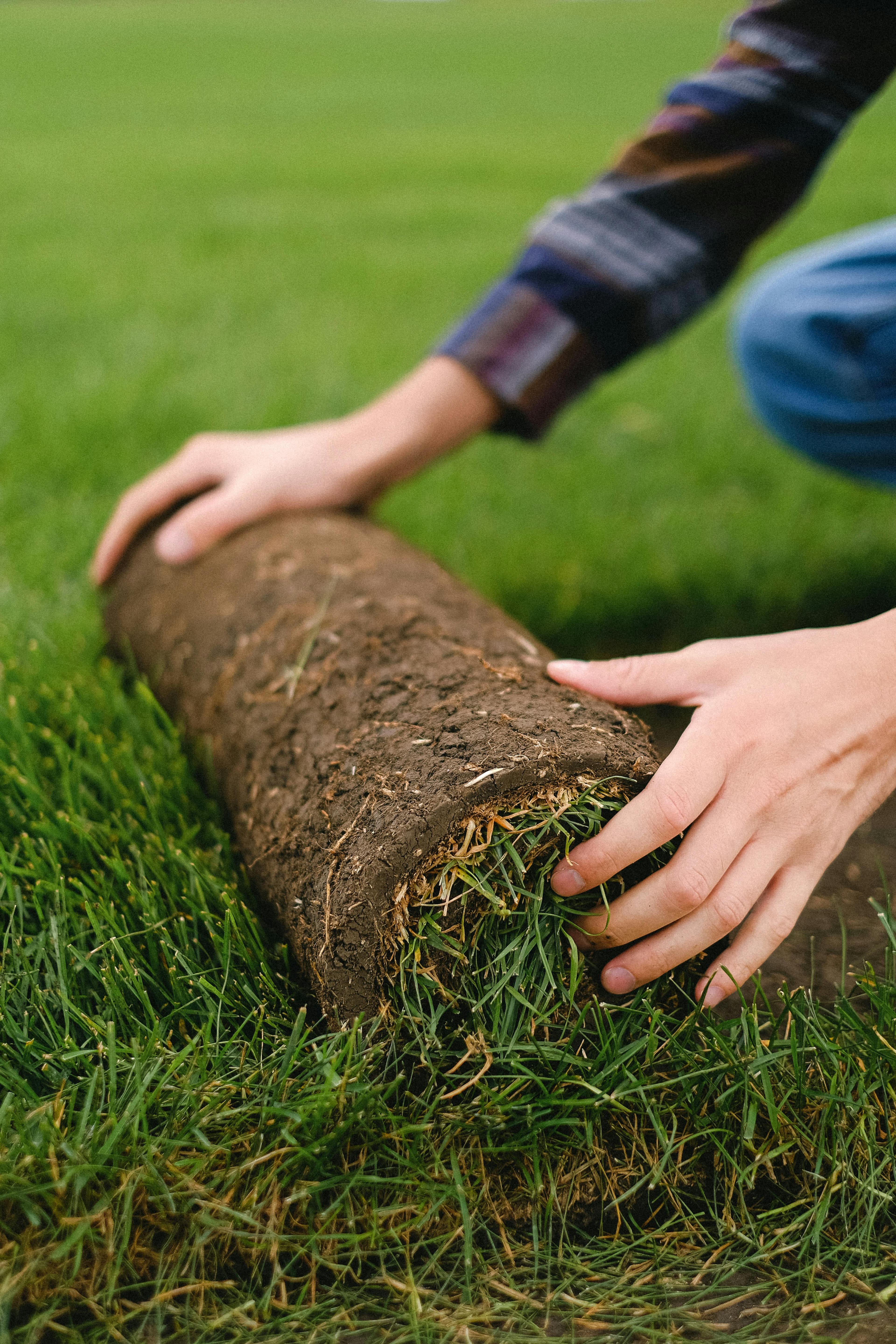
- Pre‑water: Moisten the top few inches the day before delivery so the base isn’t bone-dry. Lay sod the same day it arrives, staggering seams tightly and rolling once more to remove air pockets.
- Irrigate precisely: Water to keep the top 4–6 inches evenly moist for the first 10–14 days, then taper to deeper, less frequent cycles as the sod resists a gentle tug.
If this sounds like a lot to line up, Turf Titans handles soil prep, grading, and sod installation timing for homeowners across Huntsville and Madison. See how we install sod → Same-day response. Family-owned. No contracts.
Which sod handles shade better: Bermuda, Zoysia, or Tall Fescue?
- Bermuda loves sun and struggles in real shade. If you don’t have 6–8 hours of direct light, expect thinning, especially under trees and on the north side of fences or homes.
- Zoysia tolerates light shade better than Bermuda. In 4–6 hours of filtered light, finer-textured Zoysias often hold coverage where Bermuda pulls back. It’s still a warm-season grass, so install it in late April–May for best results in Huntsville.
- Tall Fescue handles shade best among the three. It’s a cool-season grass that stays greener in winter and endures under tree canopies where the warm-season species fade. The tradeoff: timing. The most dependable window to establish tall fescue here is fall—September through October—when soils are warm, air is cooler, and weed pressure is manageable.
If much of your yard is true shade, consider using Zoysia only where it gets decent light and reserving deep shade zones for Tall Fescue installed in fall. That split strategy often beats forcing Bermuda into areas it can’t sustain.
Why is fall a bad time to install warm-season sod here?
Warm-season sod (Bermuda and Zoysia) needs warm soils to make roots. Once 4-inch temps slide below the mid-60s—often by October in Huntsville—root growth slows dramatically. Fall-installed sod faces its first winter with a shallow root system, making it vulnerable to freeze–thaw, desiccating north winds, and soil heaving on our clays.
Add shorter days, more leaf litter shading the lawn, and frequent fall rains that can saturate tight soils, and the odds get worse. We routinely see seams open, edges winter-kill, and spring green-up lag months behind. That’s why the reliable play in North Alabama is simple: install Bermuda or Zoysia in late April through May, and leave fall to Tall Fescue if you need a shade solution.
Local takeaway and next steps
For homeowners asking when to lay sod in Huntsville, think like a root: wait for 4‑inch soils to reach the mid‑60s, then move decisively. Late April through May gives Bermuda and Zoysia the warm, oxygenated footing they need on our clay. Prep the base deeply, amend with compost, set a clean grade, and water daily for the first couple of weeks if you’re installing into early summer. Hold the line on our stance: late-spring installs win; fall installs of warm-season sod lose more than they win.
If you’d like a local team to time delivery to the weather, prep the clay right, and handle the details from grading to first mow, explore our process for sod installation. Ready to plan your project around your neighborhood and site conditions? Get a free quote for sod installation in Huntsville → /locations/huntsville-al